It’s been a long week and first aid has been top of the agenda. The new St John campaign is “A first aider in every street” – a number of AMs have signed up to this fantastic campaign which aims to make sure that every street in Wales has someone who can help in an emergency.
I took 3 days off work this week to attend a First Aid at Work course in St John headquarters in Cardiff as my previous qualification had expired and work commitments meant I couldn’t attend our normal training in Division. It was a good refresher – it’s the basics that count and we all need to keep our skills up to scratch…
…which is something that struck a nerve on Friday night when a close family member had a cardiac arrest – and from that one horrific moment when everything went wrong, suddenly everything went right. Two Consultant Doctors witnessed the collapse and immediately started CPR. The Mumbles First Responder teams and two ambulances arrived in a target-breaking 6 minutes and thanks to Early Repsonse and Early CPR, they were in a shockable rhythm when the Paramedic got on scene. Thanks to those incredible people who knew what to do, some of which are volunteers, they’re now in hospital, alive, waiting for an operation that will help repair some of the damage.
Friday night brought everything together – the reason why we do this, the reason why the course is focused so heavily on the basics and the reason why we practice and practice and practice.
The statistics are shocking – fewer than one in five people survive a cardiac arrest here in the UK, with the survival rates as low as 2% in some cases. Compare this with Norway, where CPR is taught in schools and the survival rates rise to 52%.
So, the only question left is this – why aren’t you doing something about it as well?
These days we’re becoming more and more connected and, to some degree, dependant on the Internet. Although it can result in an information overload it does have the result that you have information at your fingertips pretty much wherever you go. For example, I’m blogging from my smartphone, here in the back of the ambulance in the middle of a field – something that wouldn’t even have crossed my mind only a few years ago.

It’s a shame then really that our neighbors here today didn’t check the weather report and as a result ended up with a collapsed and broken tent from the high wind this afternoon! Whoops!
I love my TomTom Go 740. Really, I do. I buy all the extra live services and map updates for it, I use it every morning on the way to work to route me around the nightmare car park that the M4 in South Wales can be. I use it when I drive to London with business, both to find my destination and to route around traffic. I use it with St John Ambulance and Mountain Rescue to find out where I need to go. I use their route finder on the website. I use it to help me keep to the speed limit. In the year and a bit that I’ve owned it, it’s taken me to Italy and back and to Edinburgh and back, countless trips around south Wales, London, Nottingham and other places. I use the Google search functionality extensively on it (“Where’s my nearest Starbucks?” is a frequent question) and it rocks.
So, why am I so annoyed?
I’ve had a few problems with my TomTom – I’m probably what you’d consider a “power user” – I know what I’m doing when it comes to technology, I have some pretty demanding requirements. I push the limits. I have extra Point of Interest (POI) databases on my satnav showing me things like supermarkets and banks. I store my frequently used locations and I use voice control. So when things go wrong, I’m straight onto their support guys. And this, I find, is where it goes wrong.
The support people I talk to are lovely and polite, but I get a markedly different experience depending on how I raise my issue. The typical experience is this:
I have a problem, I raise a ticket on their website. After browsing the possible answers, it gets submitted. I get a response after 2 days telling me to factory reset my TomTom. This hasn’t, to date, fixed any of my problems. The ticket goes back to TomTom. I wait a while. Eventually, I either get an answer which requires a bit more conversation, or I take the second route – calling them.
I’ve spoke to TomTom on the phone a few times. Almost without fail, the people I speak to are knowledgeable, friendly, competent and are able to resolve my queries there and then. I spend 5 minutes on the phone and my problems are fixed. This morning, one 5 minute call had my issue fixed whilst on the phone when a ticket I’d opened two weeks ago was still languishing in the lost no-man’s-land of “escalation”.
This all begs the question, why should I raise tickets through the web interface? I get a significantly better experience by calling them, yet it’s in their interest to make me use the website because it’s cheaper for them.
From my perspective, this is a failure – it’s a service management failure. My biggest complaint about TomTom is that despite having the best product on the market by a significant factor, their service management lets them down. It has improved – the technical service is a lot better now, but the customer service still appears to be lacking.
So, TomTom, sort your service management out. Customers will only put up with a good product and a poor service for a while…
Having completely missed the start of the drama that proceeded to unfold in Northumbria due to the lack of updates from the BBC Breaking News twitter feed, Sean and I finally caught up tonight as we heard that there was a “siege” going on. Unfortunately, we’re away from home without our usual Sky TV, so a quick browse on the laptop and I managed to load up the BBC News 24 live coverage. I wish I hadn’t.
Let’s get this straight here, there’s an armed man who’s wanted for murdering a number of people and has made threats against both the police and members of the public in general. He is likely to be highly stressed, emotional, tired and not really thinking clearly. Oh, and he’s got a gun. Police have found him and they’re “negotiating”.
Great, fine, important news. How do you think that should be reported?
How about by broadcasting a live telephone interview with someone who has a line-of-sight view to the proceedings? By having your presenter stood at the edge of the inner cordon after being asked to stay in his vehicle? By trying to catch a glimpse of the gunman through the trees? By intervewing an emotional woman about the fact that her mother was told in no uncertain terms to stay indoors for her own safety and rebroadcasting the clip where she says her mother had a gun shoved in her face?
Am I the only one that believes that those tactics are completely irresponsible?
I see that Northumbria Police have now created a 10 mile exclusion zone.

I hope they enforce it. I also hope that the BBC gets a damn good lambasting for its behavour – I’m just as disgusted with Sky who apparently have been doing similar things, but I expect this kind of sensationalist US-style news reporting from Sky. I don’t expect it from the BBC.
When I was young, I wanted to be a policeman. I had a toy police car, complete with a flashing blue light on it and I pedalled around the garden and neighbour’s houses. I got a toy policeman’s uniform for one birthday, which I was overjoyed with.
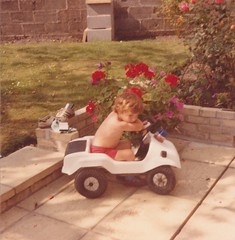
I was so convinced that I wanted to be a policeman that one day not long after I’d had the policeman’s uniform, I went missing. My mother was searching the neighbours when she had a phone call from someone who lived in the middle of our village where there’s a crossroads. I was there, in my uniform, about 8 years old, directing traffic. Yup, I wanted to be a policeman.
Skip forward some years later, I’ve not long been in the Mountain Rescue team and I’m studying to be a team medic. I visit one of my closest friends from school and tell him about my recent mountainous antics, and he replied, to utter surprise:
“Yeah, you always were interested in first aid and stuff. I was always surprised you didn’t end up in medicine.”
It was a long drive back home that night and his comment had knocked me for six. I’d never even considered a medical career and I’d long since ruled out the police having decided that I probably couldn’t handle waking a mother up at 3am to tell her that her son had died. My career in computers was taking off, so I discarded the idea of medicine – I’m not sure I fancied 6 or 7 more years of school.
I’d discarded the idea, but James’ comment obviously struck a chord. Mountain Resce helped me find out more about pre-hospital medicine and I found out that, in fact, I was interested. So, after moving to London when my employer was bought out, I decided to try something out. I wrote to the London Ambulance Service and asked if I could go out as an observer on an ambulance for a shift. A few weeks later, it was all arranged – I was to report to Oval and Kennington ambulance station at 7pm for a 12 hour shift. I arrived to a bad start – the person who was supposed to be taking me out had called in sick. I was bundled into the back of an ambulance with a Paramedic and a technician and was told to spend the night with them.
Nothing much happened that Thursday night, it was quiet and by midnight, the technician had to leave to go to headquarters, leaving the Paramedic with no crew. “Never mind,” he said, “come back tomorrow night instead – it’ll be busier on a Friday.”
Luckily the shifts I worked gave me 4 clear days off, so back I went the following evening. I met up with the Paramedic again and took a second attempt. What a night that was – in fact, I spent 3 nights out with Richard Lee, the Paramedic – who turned out to be from a village not 4 miles from where I now sit. More freaky than that was that his wife came from my village. The first night was rounded off in true Welsh colours as we picked up two lads who’d been assaulted outside the Brixton academy. Recognising their accent, Richard and I laughed when they told us they were from Penarth near Cardiff.
Those three nights that I spent learning from Richard and observing the way they work, took the little spark of interest I had and threw it unceremoniously into a huge keg full of dynamite. It ignited a passion in me that’s still going today – brning strongly enough that I’ve committed to giving up a career as a successful communications consultant and instead, to going back to school to become a Paramedic.
It’s been a long road from that innocent comment to where I am now and there are three Paramedics (all called Richard!) who’ve taught me in their own way what being a Paramedic means. For me, it still hasn’t all “come together” yet – I’ve my epiphanies along the way – sudden insights into how the body works, how to look after people and what it’s all about. Jobs that have gone so perfectly, it felt just like another exercise. But for now, the last part of the puzzle is still there, not quite yet within my grasp.
Watch this space.
This blog post was written as a submission to the Handover Carnival, hosted this month by the EMT Spot, on the theme of “…and that’s when it all came together.”
Yesterday, from a tweet by insomniacmedic, I was linked to a blog post by Buckman. He talks at length about the foolishness of some patients who refuse the care they so desperately need and the knock-on costs of the associated palliative care as they die. It’s a post and a subject that stirs deep emotions and I started writing a reply before realising it was turning into an essay. So, Buckman, here’s my response. Go and read Buckman’s post before you read this though – you need the context!
Coming so soon after the recent episode of the EMS Handover on Respect, this post brought the whole topic back to the forefront of my mind again. I know what it’s like to care for people who are responsible for their condition yet refuse to take responsibility for their actions. I know what it’s like to try and help someone who refuses your help. So I’m not unsympathetic to the plight that Buckman describes – it’s an impossible situation at times, made worse, it seems, by the litigious nature of American society. I’ll try my best to not let this descend into a rant on what’s broken about the US healthcare model in my opinion – I’ll just say that I’m glad that I live in the UK and work within the British healthcare system.
The extreme polarisation of the term “patient care” you write about at the start is something that I haven’t seen in the UK – perhaps I haven’t been working with the system long enough. But I find that extreme views are rarely beneficial to anyone, mainly because they seem to define the issue in a very monochrome way and, as Dr Ben Goldacre says so often “It’s not quite that simple…”. I’m not suggesting that the care that you personally offer is deficient in any way, just that any extreme is bad.
I do think that the concept of patient care is somethign we should hold dear to us and is key to providing effective treatment to our patients. There’s a difference between clinical treatment of a medical condition and actually caring for the patient. I think I’m lucky that coming from a first aid background, there were and still are times when there were no interventions that I could make within my skillset that would help that patient, so caring for them was the only skill I had left.
Having said that, I agree that we shouldn’t mollycoddle patients – some people need some tough lovin’ to get the point across and to help them make the jump across the uncomfortable gap of change. If your description of your medical system is accurate, that it’s a system where you can’t be honest without patients for fear of reprisals when that honesty is truly in their best interest, then I fear for that system. The system is failing to provide the best care for the patients and is crippling your ability to do so. Somethign needs to change.
I don’t think that “Do what I say or else” is an appropriate stance for a medic to take. Yes, let’s move them out of that ICU bed into a ward where they can receive palliative care, but don’t make them pay for it. This gives far too much power for a doctor who is of a bullying nature over the patient’s decisions.
I agree, something needs to be done to curb the growing trend of patients who absolve themeslves of any responsibility over their condition – but this is a problem that we see in society as a whole, not specifically in healthcare. Forcing people to take a specific course of action in their healthcare is like using a sledgehammer to crack a walnut when you’re trying to fell a tree – it’s both overkill and yet far too little at the same time.
We’re facing a growing problem where the lack of personal responsiblity in society is stressing our healthcare systems to the limit and we need to find new solutions to these new problems without compromising the care that we offer patients.
Just my tup’pence.
@ckemtp has asked for posts this month on the topic of Respect for ‘The Handover’ Blog carnival.
This is a field I occasionally feel like a bit of an impostor in. I’m not a Paramedic. I’m not a Doctor, a nurse or an Ambulance Technician. I am what I would call, an advanced First Aider. Mountain Rescue calls me a Casualty Carer and shows me how to deal with fractures, give drugs, inject people and care for people. St John Ambulance calls me a Patient Transport Attendant and teaches me to use AEDs, gases, use the equipment in an ambulance and care for people. But for all the journals I read and the knowledge that I gain, I’m a first aider.
Over the years, I’ve had respect from patients, health care professionals, members of the public and members of the armed forces. I’ve recently had a number of comments from healthcare professionals that have made me realise that there’s a lot of respect out there for volunteers in this country. Comments from members of the public, from the twitterverse, from friends and even from senior ambulance service officers have all demonstrated that they respect the work that we do. Some of then even respect that while we would like to work for the Ambulance service, some can’t because the NHS isn’t known for the luxurious lifestyles afforded by the salaries and mortgages aren’t known to be cheap things these days.
I’ve also had people treat me with significant amounts of disrespect because I, like thousands of other people in this country, are volunteers. We’re not paid healthcare professionals – but that doesn’t mean we aren’t professional in our work, whether that’s paid or not. I’ve seen Paramedics disrespected by staff in the hospitals, by patients and by their colleagues. Equally I’ve seen patients disrespected by their carers – and of all the disrespect I’ve seen, that one leaves the worst taste in my mouth.
Ingore me because I’m a volunteer. Treat me badly because you’ve had a bad experience with the commercial arm of St John. Swear at your officers. Argue with paramedics in the middle of your A&E department. They all leave a bad taste with the people around. But treat your patients with respect, even when they don’t deserve it. A mentor of mine once pointed out that we’re invited into people’s lives at moments that are significant and horrible for them – for us, it’s just another job, just another DIB, another MI. We’re invited into their lives and they share with us the most intimate details of their personal lives, their troubles, their fears. He taught me to treat my patients like human beings, simple things like asking everyone to leave the room when the paramedic is putting the leads on a woman’s chest because she has to bear her torso to do so.
I’ve learned respect and I’ve learned to earn the respect of my patients. I’ve learned that everyone has a story, even if they seem like assholes and I’ve learned to respect that people can appear like assholes when they’re going through a traumatic time.
Respect. Disrespect. Which will you chose?
Over the past 6 years we’ve seen technology change our lives. I’m probably an unusually early adopter of a lot of technologies because I work in the field, but I wonder how other people have found technology helping them in a medical aspect.
At home, I’ve used the Internet to learn – googling unknown terms, reading blogs with ECG challenges, learning about the body’s processes and how we affect those. I’ve researched specific conditions or drugs that I’ve come across and am unfamiliar with. I’ve witnessed discussions on blogs and on twitter that have made me think about my air conditioners that you can move, my handling of patients as well as conditions that I come across.
Out in the field, I’ve used my Blackberry to great effect:
- Drugs – I’ve looked up drugs that I’m not familiar with and some that even the paramedic on scene hasn’t seen before. There’s an enormous array of drugs out there and it’s important for us to be able to find out some key information.
- Conditions – we frequently attend to transport patients who have been diagnosed by their GP. Not only are Doctor’s handwriting notoriously bad, but they on occasion use terminology I’m not familiar with. A quick google normally sorts that out and gives me a better understanding of the patient’s condition and how to treat them for the short time they’re with us. I have even, on occasion, passed this information on to the nurse who’s taken our handover.
- Finding a location – ah, the perennial problem of ambulance work: finding the patient. I’ve lost count of the number of times I’ve used Google on my Blackberry to find nursing homes. Google maps has helped us navigate there when TomTom has failed.
- Getting into a house – yeah, not your usual use of a mobile phone this, but I did once make use of the Internet to find the telephone number for a patient’s family to find out where the spare key was kept. 1am, standing outside the patient’s house, freezing cold and stomping around in the snow with no way of getting in, I was very glad I had my mobile with me.
I’m actually considering getting the BNF on my phone at the moment to help us with understanding drugs – the drugs a patient is taking is often helpful in giving us an idea of what the patient is suffering from when the patient can’t or won’t tell us.
I’ve even, on occasion, been known to use my phone to make phone calls.
So, how do you use your phone? How has it changed the way you work?
Buckman is hosting this month’s edition of The Handover and asked people to write about people who influenced their career.
I have to admit, I’m not short of those. The two Richards, both of whom are accomplished and professional Paramedics in their own rights, each with a very different style. Andrew, Sharon and a whole host of others in Mountain Rescue. The other Richard who introduced me to London’s flavour of EMS work. My grandmother, a Nursing Auxiliary during the war who dispensed her own flavour of rough justice and maldod in my childhood. Malcolm, who got me involved in Mountain Rescue in the first place.
But I was looking for that person. You know, the one that made me stop and think. The one that inspired me to start down this path. And I have to admit that almost everyone in that list helped me get where I am and they may well deserve their own Portrait, but they didn’t give me that first spark.
That accolade goes to someone who didn’t really feature in that list. My grandfather.
Born in 1918 he grew up in the Welsh valleys where coal mining was The Industry. Brighter than the average my grandfather went to nightschool to learn to be a Mining Surveyor and made a career of it. He took a few years out to work for the Royal Engineers in India during the war but came back and worked in the mines in south Wales for most of his career. When I knew him, he was silver-haired and retired, spending much of his time working hard in the garden that was once a coal tip but now bloomed after his hard work. Like a lot of people his age he was a heavy smoker and I distincly remember him suffering from his angina. The little red bottle sprayed under the tongue and the pause while he waited for his heart to catch up.
I have nothing but fond memories of my grandfather. My parents both worked office jobs so when I came home from school, I would spend a few hours with my grandparents just a few hundred yards down the road from our home before my parents picked me up. He gave me my frist car, he taught me to write. He once told me that I could do anything if I worked hard and whatever it was I wanted to do, that he would support me – words that still echo in me today.
It all went wrong one Saturday in May. I remember I called into the house to say hello before I headed out for the day. My grandfather was in bed with my grandmother fussing over him. He just didn’t feel very well, nothing specific, known in the ambulance service as “generally unwell”. He looked pale, enough so that I asked him if he was OK. I asked if they’d rung the doctor but my grandfather insisted he was fine. I was 17 and didn’t really appreciate how people lie, even to their loved ones. I took his word at face value and went out to see my friends figuring it was something minor like it always had been in the past.
It was probably mid afternoon when I had a phone call. My grandfather was ill, the doctor had been called, I should come home, post haste. Grumbling, not realising the severity of the problem, I drove down to my grandparents house where it rapidly became apparent how serious it was. Our local GPs, two brothers, were the sons of the husband-wife pair who’d run the local practice before them. One of them was a cardiac specialist and he’d immediately called 999 for an ambulance, recognising the problem with my grandfather for what it was. I was sent to the bottom of the road to direct the ambulance. I windmilled for my life when I saw it and raced up the road behind it as quick as I could. I have no memory of seeing my grandfather going into the ambulance and my next memory of that day is my grandmother, flustered. My grandmother was never flustered. This was serious.
My father drove us into the local hospital 15 minutes drive away. It was a quiet journey, each of us contemplating the worst. We arrived and headed into A&E where they directed us to the Coronary Care Unit. We walked in and were ushered in quickly to see my grandfather sat up in bed smiling at us, connected up to a hundred cables. We crowded around, holding his hand and chatting quietly. My fears abated, we laughed and joked and said that we’d see him tomorrow.
The next half hour is perfectly clear. I was the last to leave and as I walked out my father was waiting for me. The doctor crossed the room in the corner of my eye and clearly called my granfathers’ name, questioningly. We walked down the corridor and my father met a friend and said he’d meet us in the car. I walked my now-much-releived grandmother out to the car and my father joined us about 10 minutes later – and asked us to come back in. The nurse had asked him to get us. Emotions running wild, we went back to CCU and were ushered into what I now know is the relatives’ room. A nurse came in to say that the Doctor was on his way and my grandmother looked her in the eye.
“He’s gone, hasn’t he?”
She paused. “Yes, i’m afraid he has, love. Doctor will be in to talk to you in a minute.”
The next bit was a blur. I have no idea what the doctor said but I remember going to visit the body, the shell, the sleeping form that was once my grandfather. I remember my grandmother taking his signet ring from his finger and wrapping my hand around it. “It’s yours now.” she said, shakily.
My grandfather had held on until we came to say goodbye to him – at least that’s how I like to think of it. Losing him tore me apart, he was a huge part of my life and I drifted through my A-levels in a daze. To this day, I still miss him sorely.
The signs were all there. When I saw him he was pale enough that an alarm bell rang in my head, but was dismissed when he said he was OK. He was sweaty. He had a feeling of being “just not quite right” and couldn’t shake it all day. He had a history of unstable angina, and was a heavy smoker. If someone described that situation to me now, I’d call an ambulance and give him half an aspirin. I’d ask about chest pain. I’d igore his insistence that he was fine.
My grandfather wasn’t some medical genius, a world-leading surgeon or medical scientist. He was a retired mining surveyor. He didn’t show me any amazing medical procedures. What he made me do was promise to myself that I’d never miss that again. If only we’ve have received some basic lessons in recognising these things at school or anywhere. I didn’t see it. I kicked myself for months that I could have done something but didn’t.
Eventually I accepted the situation, but every decision I’ve made since that saw me doing anything medical stems from that one event. From the knowledge that I could have done more if only I knew. A promise to myself and to him that I will work hard. So that hopefully, one day, I’ll turn up in time to help someone else’s grandfather.
There’s a big push in the emergency services to get information out to the front line, to the people who really need it. PC Copperfield has emigrated to Canada where the police seem to have a better handle on process and communications to the front line. Access to all kinds of data is useful when you’re on the front line – like when a patient shows you what drugs they’re on but you don’t recognise them, you can look them up in the BNF. When a patient has a rare disease that you’ve not come across but you really need to know what it is, you can look it up in a whole variety of places, like Kal once did. And last week, I used it several times in a shift, twice to satisfy my own thirst for knowlege, a couple of times to find care homes who weren’t well signposted and once to find an important piece of information.
The two not-so-important things were to look up what a bruit was and the second to find out what Tramacet is (a strong painkiller). The second resulted in an interesting conversation with the A&E nurse after we’d booked our patient in.
The other use was a little more…immediate.
A job came through to us around midnight, asking us to go to the local A&E and pick up an elderly lady from a corridor and take her home as she’d been waiting for some time. These kind of jobs are lovely because they’re simple, there’s little or no medical problems to worry about (and while I’m in this for the medicine, it’s occasionally nice to know that your patient isn’t going to die on you. Probably.) and people are supremely grateful. So we tromp into A&E, find our patient and sit her in the ambulance to driver her home. She’s a lovely old lady with a cracking black eye and mild dementia – she’s lucid but isn’t too good at remembering things.
So we get to her address and park up. There’s some talking from the back as I fiddle with the radio for a second to let control know we’ve arrived. A head appears next to me as my attendant sticks her head through the partition. “We can’t find her key.”
We help her look through her pockets. We help her look through her bag. Twice. No key. I run down and check the door, yes it’s locked. Shit. Wait – that’s a keysafe, great. I run back – does she remember the number to her keysafe? No. Shit. Any relatives? No. Son or Daughter? No. Do the neighbours have a key? No. Does she leave one under the mat or a plantpot? No. Carers? Yes, but they’re private and she doesn’t remember the company name.
Right, contact control who have nothing on the incident record. However, she was taken in earlier in the shift so the controller goes to dig around to find the original incident. Right. We empty her bag out. Still no key. Control get back to us saying they’ve spoken to the original crew who mentioned a son. Wait, a son? So I jump in the back and skirted around the earlier questions with a more direct approach.
“What’s you’r son’s name, my love?”
“Chris.”
My colleage stares at me open-mouthed.
“Where does Chris live?”
“In LittleVillage.”
This is bad news – LittleVillage is about 90 minutes West of where we were at best. Still, let’s try for his address to see if I can get his phone number. She remembers the house number and can describe the street where he lives but doesn’t remember the road name. So I get my phone out. Luckily LittleVillage is about 2 miles from where I grew up and her description of the street is one I recognise, so I don’t bother with Google maps.
Onto the BT directory enquiries page. I look up the details. Hrm, nothing in that street. Check google maps – the house number is quite large, almost 200 and there aren’t that many long streets in the village. Try this one instead – aha!
I call the number. “Hi, this is the Ambulance service here…”
“Oh, thank God, you’re taking my mother home?” Right, sounds like we’ve got the right one then.
He knew the keysafe number. And knew where she normally kept her key. So we got her in, put the fire on, made a cup of tea and helped her warm up.
Would we have got her in without the internet? Probably – control could have looked up the number for us, but it could have taken longer. Did the internet help? Yes, without a doubt – I could use the information that I had to find the address quickly and confirm it easily with the patient. Is this the most important use of the internet that we will have? No, without a doubt. I’ve already had twitter increase my knowledge of chest pain in adolescents (thanks Kal!) and teach me about conditions I might come across. We’re humans, not encyclopedias – we will come across things that we don’t know or need reminding of.
I really do think that with the arrival of Airwaves in the Ambulance service we should see smarter devices being rolled out with access to medical databases for looking up medications and conditions or illnesses. I’d like to see medical records being accessible to the front line as well – though I understand the privacy concerns. We have to be careful not to overload the guys on the front line, but access to the information when they need it really can save lives. We need to make sure that we have sources that are definitive and trustworthy and not just wikipedia.
People said that the end of the last century and the start of the new millenium was the information age. Is this the age that we see information being distributed to every person wherever they are, whatever they’re doing?